来自 昏昏睡睡HSE · From Drowsy HSE CSP DAILY LEARNING · DAY 68

危害通识与 GHS · 要点进阶 | Hazard Communication & GHS · Key Points in Depth

第 13 块 · Domain 1 · 安全原理高级应用 · 25%Block 13 · Domain 1 · Advanced Application of Safety Principles · 25%第 2 / 5 课 · 要点进阶Lesson 2 of 5 · Key Points in Depth

本课只做一件事:把「危害通识与 GHS」的四条要点逐条拆开:机制是什么、什么时候成立、最容易错在哪。

Take the four key points of Hazard Communication & GHS apart: mechanism, conditions, and the usual misread.

本课不涉及:不重复概念定义,也不做综合题——只把要点讲透。
Not covered here: No repeat of definitions, no mixed questions — just the points, in depth.

先看一张图 | One picture first
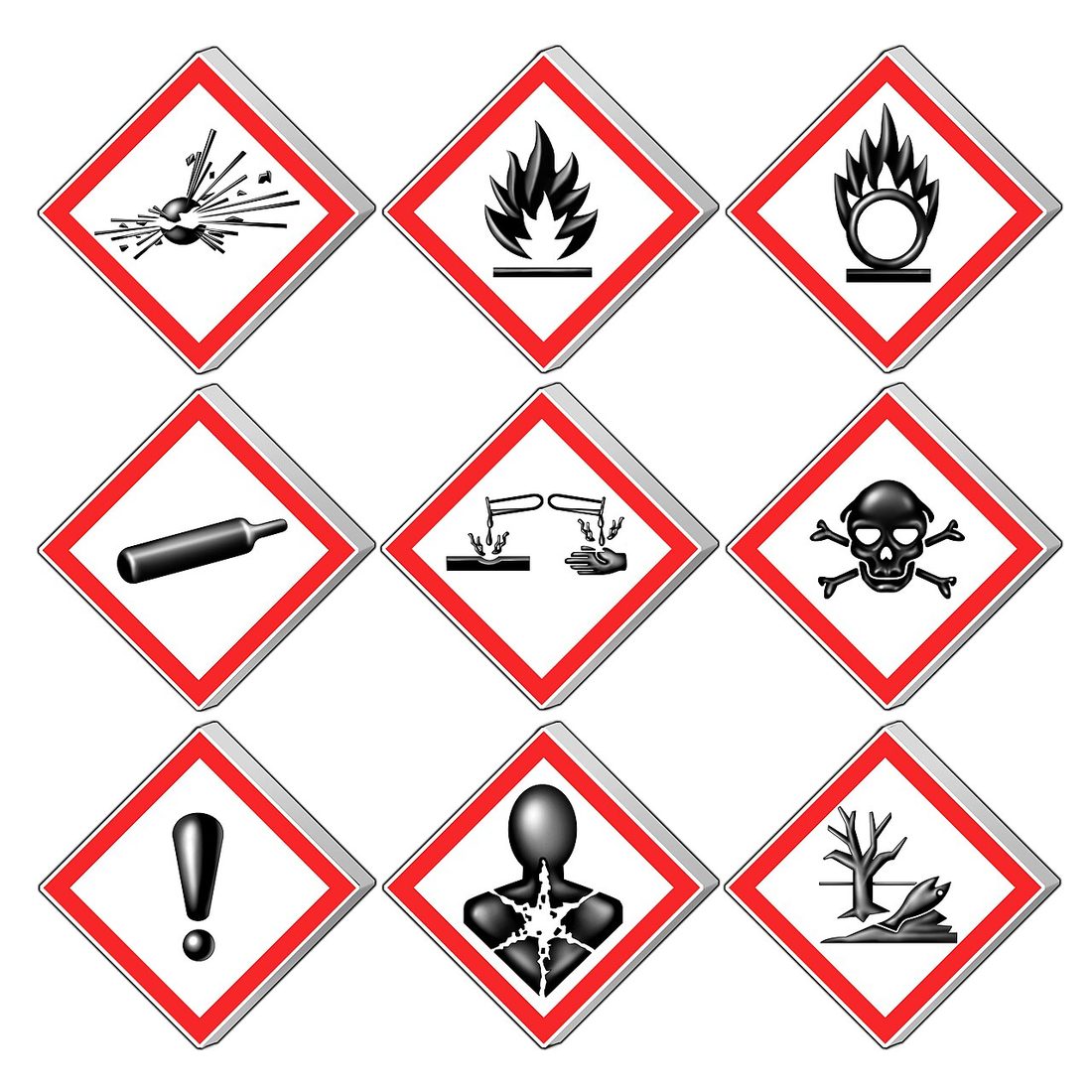
GHS 象形图:全球通用的九类危害图形,化学品标签与 SDS 的共同语言。
图解 / Figure:GHS 象形图:全球通用的九类危害图形,化学品标签与 SDS 的共同语言。
GHS pictograms: nine globally harmonised hazard symbols used on labels and SDSs. 来源 / Source: Mpelletier1,CC BY-SA 3.0,经 Wikimedia Commons(File:GHS_HAZCOM_Safety_Labels.jpg)Source: Mpelletier1, CC BY-SA 3.0, via Wikimedia Commons (File:GHS_HAZCOM_Safety_Labels.jpg)

本课目标 | Learning objectives

  1. 按顺序复述四条要点各自的机制
  2. 对每条要点说出一个常见误解,并说明为什么错
  3. 判断一个新例子属于哪一条要点

  • Recite the mechanism behind each of the four points
  • Name one common misread per point and why it fails
  • Classify a new example under the right point
  • 图片预览 / Photo preview

    图片经过压缩后保存在当前浏览器。导出失败时,可在下方预览图片上长按保存。/ The photo is compressed and stored in this browser. If download fails, long-press the preview below to save it.

    要点逐条拆 | Point by point

    1. 标签三层信息各管一件事
    Three label layers, three separate jobs
    第一层产品标识(名称、浓度);第二层危险信息(象形图 + 信号词 + H 危害说明);第三层供应商标识与防范说明(P)。分装瓶(二级容器)也必须贴标签——「那个装在矿泉水瓶里的溶剂」是 HazCom 检查的经典开罚理由。
    Layer one identifies the product (name, concentration); layer two states the hazard (pictograms, signal word, H statements); layer three gives supplier and P statements. Decanted bottles need labels too — 'that solvent in the water bottle' is a classic citation.
    常见误解 / Common misread:以为原厂桶有标签就够——分装、转移、样品瓶全部回到标签要求。
    Assuming the drum label covers everything — decanting puts every cup and sample bottle back under the label rule.
    2. 九张象形图用「排除法」记
    Nine pictograms, learned by elimination
    爆炸球、火焰、圆圈上的火焰(氧化性)、气瓶、腐蚀、骷髅交叉骨、感叹号、健康危害(人形剪影)、环境(枯树死鱼)。最易混的是「感叹号」与「健康危害」:感叹号管较轻的刺激与致敏,健康危害管严重后果(致癌、生殖毒性、靶器官、吸入致死)。
    Memorise by elimination: exploding bomb, flame, flame over circle (oxidiser), gas cylinder, corrosion, skull and crossbones, exclamation mark, health hazard (silhouette), environment (dead tree and fish). The confusable pair is exclamation versus health hazard: milder irritation versus severe outcomes (carcinogenicity, reproductive toxicity, target-organ, fatal inhalation).
    常见误解 / Common misread:把「刺激性」贴成健康危害——信号升格会造成 PPE 过度与员工不信任标签。
    Sticking 'health hazard' on an irritant — over-labelling drives over-protection and erodes trust in labels.
    3. SDS 16 节背「高频五节」
    Sixteen SDS sections: memorise the high-frequency five
    第 1 识别、第 2 危害概述(含 GHS 分类)、第 4 急救措施、第 7 储运、第 8 暴露控制与 PEL(考试最爱)、第 13 处置、第 16 其他。答题策略:问「暴露限值/呼吸防护」→ 第 8 节;问「泄漏怎么处理」→ 第 6 节;问「稳定性与反应性」→ 第 10 节。
    Memorise the high-frequency five of 16: section 1 identification, 2 hazard summary (GHS classification), 4 first aid, 7 handling and storage, 8 exposure controls with PELs (the exam favourite), 13 disposal, 16 other. Strategy: exposure limits or respiratory protection → 8; spill handling → 6; stability and reactivity → 10.
    常见误解 / Common misread:在「第 2 节」找 PEL——第 2 节给分类结论,数值在第 8 节。
    Hunting PELs in section 2 — the classification lives there, the numbers in section 8.
    4. 信号词只有两个:Danger 与 Warning
    Two signal words only: Danger and Warning
    严重危害用 Danger,较轻用 Warning——同一产品只能有一个信号词,取更严重的。象形图可以多张并存(比如又易燃又慢性毒),信号词不叠加。
    Two only: Danger for severe, Warning for less severe — one product carries one signal word, the worse one. Pictograms stack (flammable and chronically toxic at once); signal words do not.
    常见误解 / Common misread:以为每个象形图配一个信号词并列出现——标签规则是「一词定级」。
    Expecting a signal word per pictogram — the rule is one word setting the level.

    情景自测 | Scenario check

    考点应用Exam-point application

    这道题考什么:考标签与 SDS 的信息定位:从问题倒查信息在哪。
    Tests locating information: from the question back to the section.

    工人接触新脱脂剂后眼睛不适,你要快速查「该用什么冲洗、何时就医」。最该打开 SDS 哪一节?

    A worker has eye irritation after using a new degreaser. To find what to flush with and when to seek care, which SDS section first?

    自编练习题,不是 BCSP 官方真题,也不能用来预测分数。 / Original practice item, not an official BCSP exam question.

    动手练 | Practice

    1. 抄一张现场化学品桶的标签,标注三层信息各在什么位置。
    Photograph or copy one drum label at your site and mark the three information layers.

    学习打卡与笔记 | Progress & notes

    已完成 0/4 项 / 0/4 tasks complete

    连续学习 / Learning streak: 0 天 / 0 days

    进度保存在当前浏览器,不会自动跨设备同步。/ Progress is stored in this browser only.

    PNG 学习记录预览;可长按图片保存 / PNG card preview; long-press to save

    可靠来源 | Official references

    BCSP — CSP Examination Blueprint (CSP11)

    BCSP — Official Self-Assessments

    BCSP — Certified Safety Professional (CSP)

    Pearson VUE — CSP 考试预约 / Scheduling

    本课为一般性学习资料,不替代现场专业评估、法规要求或组织程序。/ Educational content only.

    ← 返回课程目录 / Back to catalog